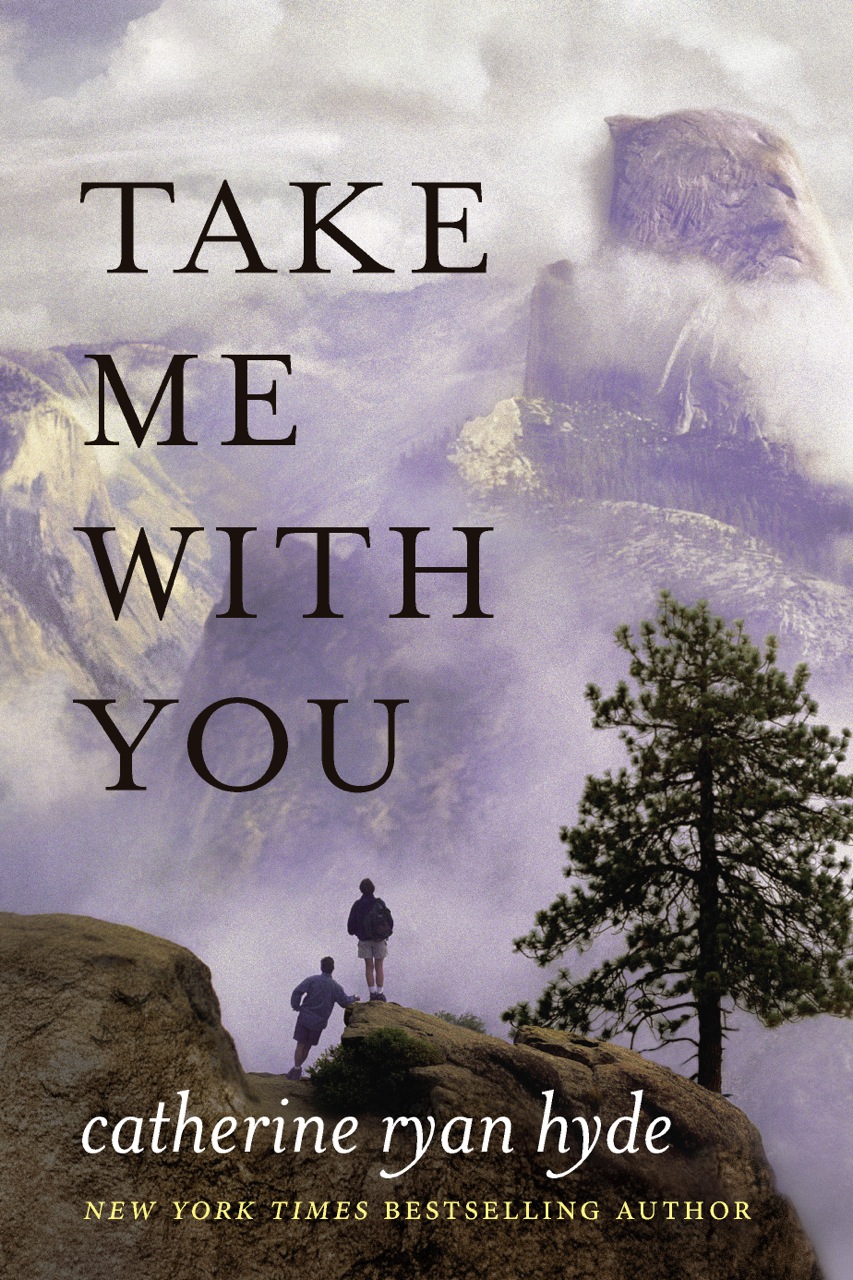
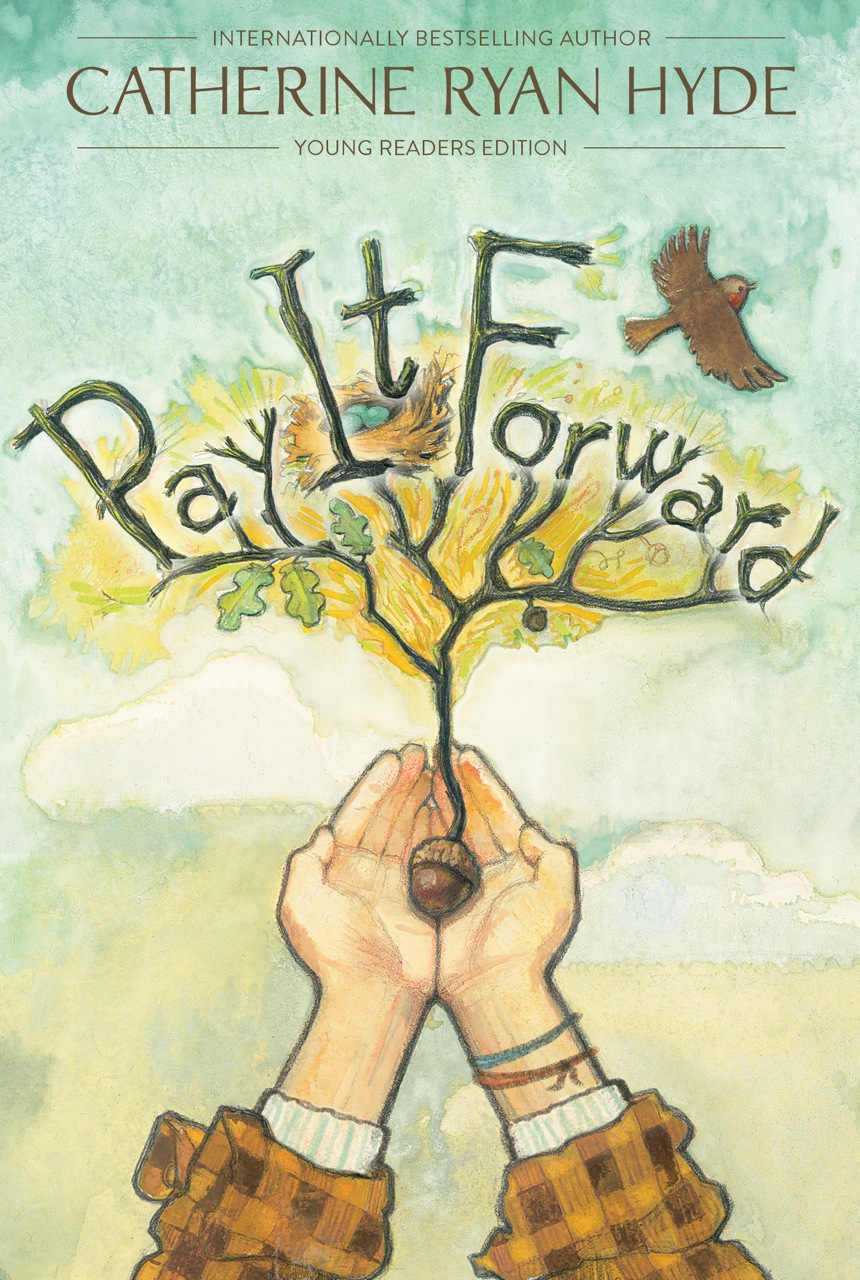
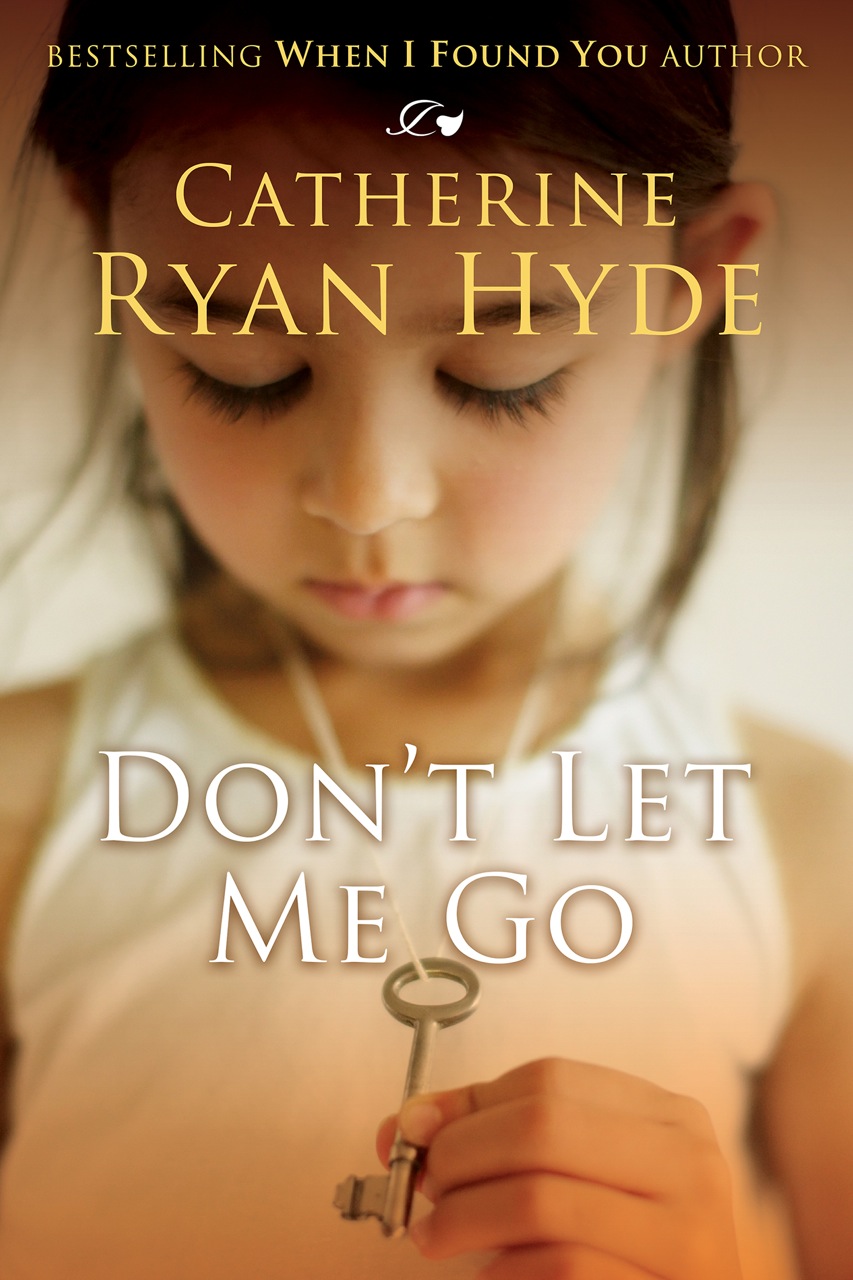
Catherine Ryan Hyde Catherine Ryan Hyde is the author of more than 25 published and forthcoming books, including the bestselling When I found You, Pay It Forward, Don't Let Me Go, and Take Me With You.


123 Street Avenue, City Town, 99999

(123) 555-6789

email@address.com


You can set your address, phone number, email and site description in the settings tab.
Link to read me page with more information.

DSCN7621.jpg

Blog

Better than Blurbs: Nobody's Girl by Barbara Amaya

Catherine Ryan Hyde

Because I no longer write blurbs, but still very much want to help other authors, I've launched a blog series called Better Than Blurbs. The authors and I have in-depth discussions about their books, which I hope will help readers identify whether they'd enjoy reading them.

This is the fifteenth post in the series. The author is Barbara Amaya, and the book is an important memoir about a very serious subject. It's called Nobody's Girl.

Me: Barbara, please tell us about the book, and the experiences that led you to write it, in your own words.

Barbara: Writing this book has meant so very many things to me. During my life the few people who heard snippets about my past have each said to me 'you should write a book!' A lot easier said than done, at least for me.

Nobody's Girl is about the many years I spent growing up in the streets of New York and Washington D.C. while I was under the control of a vicious human trafficker and his criminal associates. It's a cautionary tale for potential victims and a story about overcoming adversity and the strength of the human spirit.

I believe inside each of us is the ability to change our lives and also make differences in the lives of others. If you would have asked me two years ago if I believed that, I would have said no. I feel I have a responsibility to share my story in hopes that it can help others. One element of the criminal world of human trafficking, and of any atrocity against fellow human beings, is silence. I will never be silent again for me sharing 'my story' and speaking out is a real statement, of saying I've found my purpose and taken my life back.

Me: This was one of the most striking aspects of your book, in my mind: You managed to pull yourself out of your abusive circumstances, but in many ways that was not the turning point in your story. The turning point seemed to be the moment when you saw a news story about human trafficking. That seemed to change your whole perspective of what had happened to you. There was a name for it, and others were going through it. Then you realized it was not your fault. I mention this because I feel it makes your book a very important one, as you’ve shown that the very act of shedding light on this issue can prove redemptive. What is your biggest dream for the book and what do you hope you can accomplish in the lives of vulnerable young girls?

Barbara: One of my greatest hopes is that my book will reach vulnerable populations and the people who work with them. And that while Nobody's Girl serves as a cautionary tale and it touches people. That it shows readers that it is possible for us all to experience great change in our lives. That transformation can happen and that within all of us the will to move beyond just surviving and onto really finding and living our purpose is waiting to begin.

Part of the problem is that victims do not self identity as victims incredible as that sounds. It shows how expert the manipulation and exploitation of traffickers is as they prey upon their victims. And is exactly what happened to me.

Me: People in our society seem to want to blame the victim. I think it makes them feel a thing like this could never happen to them or their loved ones, when of course it could. Have you had experiences with victim blaming as you’ve shared your story? Do you anticipate any in response to this book? How will you handle that?

Barbara: Sure I think when people don't clearly understand something, or are afraid of it they sometimes blame the closest person: the victim. No one wants to think something as horrible as abuse or the horror of being exploited and trafficked for monetary gain could happen to themselves or their loved ones. Sadly it happens every day right here in the United States. The thing is, human trafficking happens to vulnerable people whether it's a 35-year-old man desperate to fed his family whose needs are preyed upon or a 12 year old run away like I was, who is seeking love and understanding and those needs are met in a twisted way by a human trafficker. What I mean is traffickers know how and who to target, and without education and awareness victims will continue to be exploited. I've had people ask me why I would choose to share my story now and my reply is I chose to never ever be silent again. Silence is a great part of the problem and I believe it needs to be broken.

Me: How hard is it to publish something this personal? What are your hopes and fears as it makes its way out into the world? What drove you to overcome those fears?

Barbara: Wow it's so hard! And the closer I get to launching my book it seems the more afraid I get! Just writing some of the text especially the first chapter about my early abuse was terribly hard for me to get onto the page. I had to push forward and keep telling myself this book needed to happen so it could get out there and hopefully help others. I still have fears they are not all gone! But I hope that readers will feel my intent and that this book really helps people understand the form of human trafficking I experienced. Just thinking about who I could help kept me moving forward. One of my fears is that people won't 'get' my intention on writing this book. I can't stand the term misery memoir, my book is so far from that. Far from being miserable it is a story of transformation of going from being completely beaten down so many times and somehow rising up and moving forward. So I hope readers get that.

Me: When I was a young girl in school (I can now see, looking back) I was programmed to accept abuse from my peers. I had low self confidence, and other kids could see it and feel it, and they pounced on it. People I had never met would tease and torment me in ways that bore a striking resemblance to past abuse. So I understand at a deep level the way we can be “set up” at an early age. When you’re in the middle of that, it’s nearly impossible even to see it, let alone find your way out. So I understand that aspect of human nature, and this next question does not come from my own doubts. But some who read the book may expect the kind of human trafficking in which a girl is kidnapped and literally held captive. What do you say to those who ask why you didn’t run away?

Barbara: This is a great insight and a good question! One I love to answer when I do presentations about human trafficking. Why don't they just leave? Why did you stay? How is it possible you were trafficked for ten years? I am not a doctor but I do my best when I get these type of questions to share what I have learned about what I went through mentally during the years I was being trafficked. I was experiencing the same things that those who experienced Stockholm Syndrome experience, it's called trauma bonding when a captive bonds with their captor. The same thing happens when during domestic violence when a battered and abused wife stays with her husband. Why doesn't she just leave? She cannot explain it but she feels compelled to stay. I was a child when I was exploited and manipulated and inside I was scared and reacted like the child I was. During the trauma and violence I began to bond with my captor, my mental captor. I did sometimes try to run away but would find myself returning either by force or of my own accord. The mental chains he put in place were stronger than any metal chains would ever have been.

Me: Who, if anyone do you still blame? And what advice would you give to parents who want to raise their girls to be safe in this world?

Barbara: Sadly I feel we as a society are to blame. Human trafficking is about supply and demand bottom line. And until we teach young men and boys how to love and respect themselves and the women in their lives, there will be men who grow up and think they have the right to 'buy' a woman. Until we learn that we are all connected by our very humanity, that we must all love and respect each other enough to believe fellow human beings should not be bought, sold and exploited for financial gain there will be victims and traffickers to exploit them. I have had to let go of anger and blame especially blame for my mother, and it's been a long journey doing so. I know now that she was only doing the best she knew how to do.

Learning to stop blaming myself has been even harder, but today I finally understand I was a child and I was preyed upon and it was not my fault.

I would tell parents to arm their children with self love and self esteem so that they are not vulnerable to the type of trafficking I experienced. Human traffickers prey upon those they consider weaker than them, a child with high self esteem is harder to coerce and control than one such as I was at age 12. I was pretty much a walking target with non-existent self esteem.

Me: What’s next for you? Do feel you have one book in you and this is it? Or can we expect more from you in the area of published work?

Barbara: This is not the end! I have actually published a graphic novel, The Destiny of Zoe Carpenter, and an accompanying Curriculm aimed at middle school age students and other readers. I wrote the book in hopes of educating young readers about human trafficking. The main character Zoe is a crime fighting super hero who along with her sidekick Carl discover their unique destinies and a powerful amulet that helps them fight the bad guys! ( I tried to be creative and hold young readers attention while also giving real facts about trafficking!) I am also working on a collection of short stories from my own life as well. Writing Nobody's Girl was difficult for many reasons, one was having to pick and choose what to include in the book. I pretty much grew up on the streets of New York and Washington D.C. From the age of 12. So many things happened that got left out of Nobody's Girl so I'd like to give my readers the rest of my stories in another book!

Me: Please ask your own question and answer it. 

Barbara: I'd like to ask myself if I could go back in time and go through all of the trauma again would I?

That's a hard question to answer! I'd like to say of course I would go back and go through it all again because it all made me the person I am today, someone who has the ability and compassion to help others so they never have to live through what I have. And that's mostly true. I honestly don't want to change who I am today, I just wish that my younger self didn't have to suffer so much horrific trauma and that she didn't have to lose so much time as she found her way and purpose in life. I do feel that I've taken my life back and I know I'm helping others. My greatest hope is that my book gets into the hands of those who will benefit from reading it the most.

Me: The book is being released in May, but I'm posting this blog interview now because you can currently purchase the book at Animal Media Group. You can learn more about Barbara and her books on her website.

Share This Journal: a Pay It Forward project

Catherine Ryan Hyde

Amy Gopel and Keryl Pesce

Amy Gopel and Keryl Pesce

A few days ago I got an email from a reader named Amy Gopel, who wanted me to see how she was personalizing the PayIt Forward idea and helping to take it one step further. Here's what she said:

Hello - I love so much what you are doing. So many believe changing the world is dependent upon political leaders in position of "power." I believe changing the world is in each of our hands through the power of one act of kindness at a time. I know what you stand for and honor and respect your ability to recognize that life is about setting boundaries but still allowing others to reach out to you on your terms! I don't want to take too much of your time, I am not asking you for anything other than to know that you are responsible for a book that I co-created with my friend Keryl Pesce. It is called "Share This Journal" and it is a book designed to encourage and document random acts of kindness. How it works is the owner of the journal records his or her name and contact information inside, performs an act of kindness for someone, records the act inside and gives the recipient of kindness the book. That person then records his or her reaction, performs an act of kindness for someone else, records it and gives the journal to that person. There are 26 opportunities for acts of kindness with the final act being to contact you as the journal owner and return the completed journal to you. You then a re able to see the ripple effect of your one kind act and the impact it had. The idea was born when I , following the death of my father in law, wanted to show our 9 year old daughter the power of a chosen response to adversity. I gathered our daughter and her friends, disassembled the flowers from the funeral, reassembled them into small bouquets and took the girls out in the community to gift them away as random acts of kindness. We came upon a woman who was brought to tears as her son had recently passed and she had asked for a sign he was OK. The next thing she knew, a young girl was handing her flowers. It was such a powerful moment that I wanted a way to recapture this type of experience for others.  I just wanted to let you know that the book is third best thing I've ever done (the others are my daughter and husband).  I would not have come up with this concept  had you not come up with yours!  I believe we are all connected and I feel overwhelmed with gratitude resting in the belief that somehow we were connected. We love what you are doing and wish you much success in spreading kindness around the globe.  All "your children" are beautiful, not just Pay it Forward. Thank you again, Amy Gopel

I looked up Share This Journal on Amazon, and I think it's a terrific idea, so I want to share it with my readers. I may end up buying a few of these to give as gifts. If any of you, my readers, choose to try this journal, I'd love to hear about your experiences!

The Pay It Forward Foundation has news...

Catherine Ryan Hyde

...and a brand new website!

I'm pleased to announce that the Pay It Forward Foundation has a new direction, a new executive director, and a brand new website that better defines our work and goals.

First I want to thank Charley Johnson, whom many of you know, and Kerry Taylor, who worked behind the scenes for many years as part-time director. Both have decided it's time for them to move on, but both were nice enough to stay in place to smooth the transition.

Then I want to introduce you to David Goodwin, our new full-time executive director. I also want to show you the website he created for our foundation. We are turning a huge amount of our focus toward our Young Readers Book Program. For those of you who haven't read the earlier posts about it, it's a program in which the foundation acquires discounted copies of Pay It Forward: Young Readers Edition and donates them to classrooms at no charge. Sounds too good to be true... and in some ways it is... but only to this extent: there are only just so many books we can afford to buy at this point. We are counting on you for small donations, and for spreading the word that they are needed, and how much good they will do.

Please take a look at our brand new website at  www.payitforwardfoundation.org, and join us if you can! 

BIG audio giveway

Catherine Ryan Hyde

I'm very happy to report, all in one place and at one time, what I've announced in bits and pieces over the last month or two.

Audible audio approached us several months back about acquiring four of my independent (in the US) titles and adapting them into unabridged audiobooks. They are: Where We Belong, Don't Let Me Go, Second Hand Heart and When You Were Older.

I'm please to say they are now all available for purchase/download. Note the titles above are links to each audiobook.

But now here's what I'm even more pleased to say: Audible was kind enough to send ten promotional codes for each title. Each code is good for one free download. I'm only keeping one of each, and I've already given one more of each away to a sight-impaired reader. That leaves eight free downloads of four audiobooks, for a grand total of 32 free audiobooks. So a hundred people could enter this giveaway and each still have a one in three chance of winning.

Here's how it always goes (with one addition--please indicate if you have a preference among the four titles):

Leave a comment below to be entered. Please DO leave your email address in the comment form (even though it will say it's optional). I promise I won't use it for any other purpose but to notify you if you win. Please DON'T leave your email address in the body of your comment unless you want everybody to see it. (It will seem there is no place for your name and email. But when you hit "Post Comment," you'll see those fields come up.)

If you have trouble, email me and let me know (my address is on the Contact page) but it seems commenting is fixed for most of you.

And last, if you're reading this on GoodReads, please click through and leave your comment on the original blog on my site. Otherwise I worry I'll forget the GoodReads folks when the time comes to draw names.

I'll collect entries until about the end of the month and then choose names at random. Good luck!


Better than Blurbs: Keep the Ends Loose by Molly D. Campbell

Catherine Ryan Hyde

Because I no longer write blurbs, but still very much want to help other authors, I've launched a blog series called Better Than Blurbs. The authors and I have in-depth discussions about their books, which I hope will help readers identify whether they'd enjoy reading them.

This is the fourteenth post in the series. The author is Molly D. Campbell and the book is Keep the Ends Loose. It's available in Kindle, and in paperback as of today. (Hooray, book birthdays!)

Me: Molly, please tell my readers, in your own words, a little about your novel.

Molly: Keep the Ends Loose started as a character study of a woman who lived alone, happy in her little cottage. But it ran away with me as I began, and it morphed into a book about family secrets, the wisdom of youth, and the idea of forgiveness—what is it, really, and how do actual people deal with forgiving those whom they feel have wronged them. I wrote it in first person, through the eyes of a very precocious fifteen year old girl. Mandy Heath is an amalgam of all of the youthful protagonists I have read and loved through the years, especially Anne Shirley, Holden Caulfield, Jo March, and Flavia De Luce. Mandy is able to talk about her family crisis as a member not directly “hit over the head” with the debacle, but as a somewhat objective observer. And, of course, the book has a humorous and ironic tone, as I am a humor writer at heart.

Me: I first planned to ask you for a little bit more of a plot synopsis. But then it hit me that your book is very character-driven. There’s plot there, but it’s the quirkiness of the characters that’s really your stylistic signature. So instead would you please tell my readers a little about your major characters and what makes them each such individuals?

Molly: I have always been more interested in characterization than plot. When a book has both fascinating characters and a brilliant plot, I am amazed. Here are the people that drive Keep the Ends Loose:

Mandy Heath is fifteen, very smart, and a wry observer. She sees herself as boringly average, and when she compares herself to her mother, Winnie, Mandy feels a bit inferior. Mandy clings tenaciously to childhood, because she fears all the things that adulthood offers: college, career choices, leaving home, and of course, sex. Mandy has no idea how mature and competent she really is. She has a keen sense of irony, and her story telling ability is what sets Keep the Ends Loose apart from other novels about teens. I have always been drawn to precocious narrators, since I read Anne of Green Gables as a child and completely identified with Anne Shirley. 

Barley Crowder is Mandy’s best friend. Barley and Mandy are complete opposites. Where Mandy plods, Barley glides. Mandy is overwhelmingly average. Barley is a junior-high superstar. Barley has gleaming blonde hair, a perfect complexion and figure, and she is wildly popular at school. Mandy enjoys life safely in Barley’s shadow. Barley is a take-charge type who is the catalyst for much of the plot resolution—she is a lot like Winnie, actually.

Roy Heath is the kind and gentle pharmacist who is Mandy’s dad. Mandy sees him as saintly, in compared to her mother. I modeled Roy on my husband, who is the definition of unconditional love. 

Adam Heath is a typical teenaged boy. Mandy’s older brother is, of course, portrayed through her lens, and so we see him as very one-dimensional: the way most siblings view one another. He is annoying, stupid, and monosyllabic. Until he isn’t.

Iris Heath is Mandy’s aunt. She is another complete opposite--of her sister Winnie. She is willowy, beautiful, musical, and graceful. But, as Mandy reports, there just isn’t much in there…Iris is bland. I invented this bland woman around whom the entire plot revolves, because once again, I like the contrast between the two sisters, and I also wanted to focus the plot around Mandy and her immediate family without too much complication from Iris. Iris, of course, is not what she seems, because once again, she is portrayed only as Mandy sees her. As the plot unfolds, Iris gains dimension, and we see how Mandy’s view of her aunt, and actually her entire family, evolves as the book progresses and as Mandy matures.

Winnie Heath is the chubby dynamo about whom Keep the Ends Loose swirls. She is determined, bossy, and she doesn't have one bit of impulse control once she has made her mind up to do something. The book is in large part about forgiveness, and in Winnie, we see a woman who is obsessed with "tying up that one loose end" that has hounded her for years. That is all I can say without spoilers, but I have often wished I had a little more of her dogged determination!

Mandy is able to tell the story of her family’s debacle through a wry and slightly detached lens. She is really me—I have always been a watcher. I wanted to tell this story through a humorous and slightly innocent viewpoint, and this is how Mandy is. She can be both upset and hilarious at the same time.

Me: You’ve done something unusual with Winnie. You’ve made her a big woman—that is, overweight—but also attractive and sexy, someone who has never had trouble getting men’s interest. That’s unusual. In most books, big characters seem purposely placed as tragic and unfulfilled figures. I like it better your way. What inspired you to break that (unusually moldy) mold?

Molly:  I had a good friend in high school who was very popular with boys. I could never understand it, because she wasn’t really pretty. She was  a little overweight-- extremely confident, however, and seemed to think of herself as a siren. And it worked. I thought of her as I created Winnie—and I loved the idea of a chubby woman as a mankiller. I like to tweak stereotypes.

Me: What’s your ideal target audience for this book? Your main character is a teen, of course, so Young Adult seems to go without saying. But did you write this fairly exclusively for young adults, or are you hoping to appeal to a variety of ages? Who is/are your ideal readers?

Molly:  I wrote it for adult readers, but then halfway through, I realized that it would have appeal to young adult readers as well. I am very comfortable writing as a young girl, because I actually feel as if I am still a teenager inside.

Me: You called yourself a humor writer at heart. Talk to us a little about your background as a writer. Is this a debut novel, or is there a rich body of work behind it? And once you’ve told us a little more about your history, please tell us why your heart is drawn to comedy.

Molly:  I have always been “funny.” I initially wanted to be an actress, and comedy was my forte. I have always loved quirky people, and I am drawn to comedy. I think that pain is often very well expressed via comedy, and heartbreak often has a funny flip side. I love words as well, and I like to mix things up. For instance, in Keep the Ends Loose, Mandy calls her father “a cross between a genius and a stuffed animal.” This is just the way I think, I guess!

In terms of a rich body of work, yes. I spent an entire year making up character names and then writing a character sketch for each one. I self-published many of them in my first book, Characters in Search of a Novel. I have always wondered how a name might influence a person’s life: wouldn’t John Smith have a much less eventful life than Rollie Sidebottom?  And then about a year ago, I downloaded a drawing app, and I discovered how much I like to draw the faces of my characters. This opened up a whole new world of fun for me!

I also have blogged weekly for about nine years.  Practice, practice.

Me: What’s next for you?

Molly:  I am writing a book about a lonely woman who makes her living writing erotic fiction, and the friendship she makes with an eleven-year-old girl. They save one another. Wait—this sounds like a Catherine Ryan Hyde novel!

Me: Please write your own question, and answer it.

Molly: If you could have great talent in another area, what would you choose to do?

I would love to be an animal rescuer. I have always loved animals, and one of my goals in life is to hold a baby lion. This will never happen.  I would also like to hug a baby beaver. Again, no way.  Because I could never actually be a rescuer—I would end up trying to keep all the animals I rescued. I would be a complete failure. I know this, as I have five cats sitting in my kitchen at this very moment.  Catherine, thank you so much for having me!

Me: No, thank you, Molly. You are always fun. Readers can learn more about Molly by visiting HER WEBSITE, or you can follow her on Twitter.

Deal Alert for paper people

Catherine Ryan Hyde

I could just sit here and amuse myself by trying to say "paper people" ten times fast, but instead I want to tip you to a deal. The paperback edition of my novel The Language of Hoofbeats is marked down (from $14.99) to $9.49, and that price will last for the entire month of March.

So if you prefer paper books, and get slightly ticked that the price deals are always on ebooks, here's your chance.

If you've read this one, or already have the paperback, may I plant an idea in your head? [[ Gifts for readers. ]] Who said that? Wasn't me!

I just always want to tell you about deals because you're my faithful readers and you deserve all the price breaks I can share with you.

Happy reading! 

Giving away a book you can't buy! (Yet.)

Catherine Ryan Hyde

Look what the UPS guy just brought me. A carton of advance readers' copies of Worthy. This is my next release, due out in June of 2015. You can't buy it yet.

Does anyone else smell a giveaway coming?

Please, as always, read the following before putting yourself in the running:

Leave a comment below to be entered. Please DO leave your email address in the comment form (even though it will say it's optional). I promise I won't use it for any other purpose but to notify you if you win. Please DON'T leave your email address in the body of your comment unless you want everybody to see it. (It will seem there is no place for your name and email. But when you hit "Post Comment," you'll see those fields come up.)

If you have trouble, email me and let me know (my address is on the Contact page) but it seems commenting is fixed.

And last, if you're reading this on GoodReads, please click through and leave your comment on the original blog on my site. Otherwise I worry I'll forget the GoodReads folks when the time comes to draw names.

I'll collect entries for about a week and then choose three names at random. Good luck!

UPDATE: Okay, I have just closed out this giveaway and chosen three winners. They are: Beth Arvin, Hlyan Htet Oo, and Pat Wieczorek.

If you didn't win, two reasons to take heart. One, there's always the no-losers, seven-entry rule. Two, I have more of these, and will give a few more away between now and the release date (June 2nd).

When You Were Older in unabridged audio!

Catherine Ryan Hyde

I'm thrilled to report that another of my titles is now available for preorder in an unabridged audio edition. Audible recently purchased four of my backlist titles and is producing and releasing their audiobooks one after the other. This time it's When You Were Older. It releases on February 10th (soon!) but can be preordered right now.

Just go to THIS LINK.

Two more announcements to follow shortly.

Usually I say "Happy reading!" In this case I should probably say "Happy listening!" Or "Happy commute!" Because nothing makes a commute better than a good audiobook. 

Deal Alert: Take Me With You

Catherine Ryan Hyde

Remember how just last month WHEN I FOUND YOU was a Kindle Monthly Deal, marked down to $1.99 for the whole month of January? Well, today it's February, it's back up to $3.99, and today TAKE ME WITH YOU starts its run as a Kindle Monthly Deal for February.

Yup. $1.99 all month. So if you haven't read TAKE ME WITH YOU, here's a good chance to pick it up for a song. If you have, this is a great month to recommend it to a friend.

I'm doing my best to keep the affordable books coming, and Amazon is helping a lot!

Happy reading!

New swag!

Catherine Ryan Hyde

Bookplate #1

Bookplate #1

In an ongoing effort to bring you swaggier swag to thank you for your loyalty, I have this happy announcement: 

Laron Glover of Ninth Moon has designed and created these three lovely custom bookplates. They can be personalized and signed, and they are easy to mail to you. Now all of my books on your shelves can be signed copies!

Bookplate #2

Bookplate #2

Bookplate #3

Bookplate #3

Here's how to get one (or more). It's easy.

Address an envelope to yourself and put a stamp on it. Fold it up and mail it to me at:

P.O. Box 552, Cambria, CA 93428 

Be sure to tell me which of the three designs you want and how you'd like it personalized.

That's it! It's my way of saying thank you!


Commenting fixed! Let's celebrate with a giveaway!

Catherine Ryan Hyde

I just heard great news this morning. The problem I was having with blog comments (about 25% of you were unable to leave a comment on my blog) has been fixed. Or so I've been told. I'm really keeping my fingers crossed that this will bear out.

It coincides nicely with my author team at Lake Union sending me eight large print hardcover editions of Take Me With You. You know the drill by now. I keep two to archive. The rest are for you folks.

Please, as always, read the following before putting yourself in the running:

Leave a comment below to be entered. Please DO leave your email address in the comment form (even though it will say it's optional). I promise I won't use it for any other purpose but to notify you if you win. Please DON'T leave your email address in the body of your comment unless you want everybody to see it. (It will seem there is no place for your name and email. But when you hit "Post Comment," you'll see those fields come up.)

If you still have trouble, email me and let me know (my address is on the Contact page) but I'm really hoping it's fixed.

I'll collect entries until the end of the month and then choose six names at random. Good luck!

An update on the Young Readers Book Program

Catherine Ryan Hyde

Most of you know that on October 30th of last year I announced the Pay It Forward Foundation's Young Readers Book Program with my blog post entitled You Can Pay It Forward to the Pay It Forward Foundation.

I asked people not only to spread the word that classroom sets of Pay It Forward: Young Readers' Edition are being given away free to teachers, but also spread the word that donations are needed to keep the program going.

Here's the update: We purchased 325 books with a donation made by me to get the program started. We purchased a second 325  copies with matching funds from the Foundation. We have given away almost 600 books to teachers all over the country as well as book grants to Australia and Sweden. We have 60 copies left.

What does that mean for the state of the Young Readers Book Program? That's up to you. We've received a few donations into the program, about enough to give two more book grants of 30 books each. Then what? We either get more money into the program, or we say it was great while it lasted. I hope we get more money into the program.

If you want to help, a small donation would be great, but so would sharing. If you all share this call to action, we'll have it made. Most people can kick in $10 or more, but the trick is reaching enough people. So please do share that we have books to give away, but know that they will be gone almost immediately. It's the call for donations that will keep these books flowing to teachers who couldn't otherwise afford them.

Here is the donation page of the foundation. There's a drop-down menu that will allow you to dedicate your funds directly to this program.

Thanks, and let's keep Paying It Forward!

Deal Alert: When I Found You for $1.99

Catherine Ryan Hyde

I'm pleased to announce that When I Found You has been chosen as a Kindle Monthly Deal for the third time in its published life. That means that the Kindle ebook edition will be $1.99 for the entire month of January.

This was a very significant book in my life. It sold at least as well as Pay It Forward, restarted my career, and helped me connect to my audience of readers (translation: YOU), the people who like to read what I like to write.

If you already have a copy, please pass this deal along to reader friends who have not read it. That word of mouth is always much appreciated.

Happy New Year, folks! I think it's going to be a great one.

The 15th Anniversary Edition of Pay It Forward is here!

Catherine Ryan Hyde

Today (December 23) is a book birthday of sorts. Today is the day Simon & Schuster releases the 15th Anniversary Edition of the Pay It Forward book, the original adult version. It has a lovely new cover, a new introduction by me, and it's a great celebration of the fact that the book has been in print for fifteen years! The more you know about the publishing business, the more you will appreciate how truly unusual that is.

I told my former agents (they are now in a new line of work) years ago that my goal was for Pay It Forward to stay in print longer than I do. Well, I still have a few good decades in me, but so far so good.

Pay It Forward fans, please pass it on. Great time to buy copies to give as gifts. Yeah, I know. We just missed Christmas buying. But Pay It Forward is about giving all year round, not just on Christmas.

Thanks to all of you who made this book such a success and kept it in print all these years by buying copies. You are appreciated!

The Don't Let Me Go scene adaptation is here!

Catherine Ryan Hyde

I've been talking about this for a while. And if you follow me on social media, you've probably seen a couple of little short "teasers" for it, such as a montage introducing the characters, the Grace actress doing a monologue she memorized for her audition, and even a behind-the-scenes "making of" video. (If you didn't see those videos, you still can by going to the Don't Let Me Go Scene Adaptation page in Extras.)

It's not a whole movie. It's an adapted scene. The best way I can describe it, I think, is to say it's a very different way of looking at a book trailer. In the past I recorded myself reading excerpts from a book and made a little film or montage of photos for you to watch while you listened. But this really takes it a step further. It's an actual live-action production of the excerpt!

Okay, enough talking about it. Here it is. And of course I look forward to hearing what you think!

Celebrating a book birthday today!

Catherine Ryan Hyde

I'm vaguely questioning whether this even needs saying. My wonderful readers have been so all over this new book. Most of you have pre-ordered it. I already have excited posts and comments to Facebook saying that the ebook has just dropped onto their Kindles.

And besides, I've been doing a countdown to the book, for heaven's sake.

But I'm saying it anyway, if only because it's so exciting. Just in case there's anybody out there who doesn't know, this is a book birthday for me. This is the day The Language of Hoofbeats bursts out into the world.

The reviews are just lovely so far, and it seems to be enjoying a great reception.

If you preordered it, look on your Kindle. It should be there. If you didn't preorder it, if you go click the buy button now, for $4.99 you can be reading it in about 30 seconds.

Now that's something to celebrate! I hope you'll come back and share your thoughts, either publicly or by email. I always love to hear from you.

Yet Another Deal Alert, this time for paperback

Catherine Ryan Hyde

In addition to the WALK ME HOME ebook being featured as a Kindle Monthly Deal, TAKE ME WITH YOU is included in a new print book deal, just in time for the holidays. It began Monday, December 1 and will run through the end of the month. The beautiful trade paperback edition is only $9.50--more stocking-stuffers for the readers on your list! 

And here's where it really gets good, in my opinion. With the Kindle Matchbook Program, if you buy a copy of this book for $9.50 to give as a gift, you can get the Kindle ebook for yourself for only $0.99.

In other words, happy holidays to all!

Deal Alert: Walk Me Home for $1.99 all through December

Catherine Ryan Hyde

Great news: Walk Me Home has been chosen as a Kindle Monthly Deal for the month of December! That means the Kindle ebook is only $1.99 all month. And what a great month for it, too, right? More stocking stuffers. And of course you get to buy holiday books for yourself, too.

So if you missed this title, here's your chance. And you might pass the deal news along to your reader friends, if they're the type to appreciate such bargains.

Between this monthly deal and the release of The Language of Hoofbeats on the 9th, December promises to be a great month.

Thanks, and happy reading!

Better Than Blurbs: Dissonance by Lisa Lenard-Cook

Catherine Ryan Hyde

Because I no longer write blurbs, but still very much want to help other authors, I've launched a blog series called Better Than Blurbs. The authors and I have in-depth discussions about their books, which I hope will help readers identify whether they'd enjoy reading them.

This is the thirteenth post in the series (hope you're not superstitious, Lisa). The author is Lisa Lenard-Cook and the book is a favorite of mine, Dissonance.

Me: Will you please tell my readers a little about the book in your own words?

Lisa: In other interviews (including the readers’ guide on my website), I’ve talked about the three seeds for the book. But because, twenty years after I first wrote it, the reissue gave me the opportunity to reread it myself, I’ve read it as a reader. So I’d love to answer this question as if I were writing a review.

At its heart, Dissonance is about love, war, and forgiveness. It begins in 1995 when Anna Kramer, a piano teacher in Los Alamos, New Mexico, learns she has inherited the journals and music scores of Hana Weissova, a concert pianist originally from Prague whom she does not think she knows. As Anna reads Hana’s journals, plays her music, and learns about Hana’s experiences in the concentration camp Terezin during World War II and in New Mexico when the war is over, what she discovers about Hana and her life helps her come to terms with the mysteries and misunderstandings of her own.

In addition to these interwoven stories, music theory is sprinkled throughout the book. Some readers may be put off by this seemingly disembodied voice. (The first sentence is, “The piano is unique among instruments for its double stroke.”) What is it doing? Why is it here? Part of the answer lies in the opening section of music theory, when we are told that dissonance “is a fitting metaphor for what this [the 20th] century has wrought.” But if we also ask that the first sentence of a fiction contain all that comes after, then we need to look more closely at that “double stroke.” I’ll leave the many possibilities open to the reader.

Me: To throw a little of my own experience in here, I not too long ago began to write a book that was to be set in Warsaw during the Nazi invasion. I never ended up finishing the book. I may still at some point. But I have to say it, the research dragged me down. Yet Dissonance never dragged me down. It never felt overwhelmingly heavy. Can you tell us about the research you did for the book? Do you have any idea how you pulled off a book that touches on the Holocaust but is not depressing? Because it’s really quite a feat.

Lisa: What a lovely compliment. Let me begin by saying I never planned to write a book about the Holocaust. For one thing, I didn’t live through it, although many of my friends’ parents in North Buffalo did. But the more I’ve thought about the Holocaust aspect of the book over the years, the more I’ve realized how much Hana Weissova’s indefatigable spirit owes to Gerda Weissman Klein, my childhood friend Leslie’s mother, whose memoir All But My Life I highly recommend. Hana’s story has little in common with Mrs. Klein’s. But among all the survivors I knew when I was growing up, only one—Mrs. Klein—chose to share her story. In doing so, she became an inspiration to others, and in particular to me.

[Me, note: I should probably mention at this juncture that Lisa and I have some interesting coincidences between us. I also grew up in North Buffalo, though we didn't meet there, and my father's side of the family is Jewish. His mother, my grandmother, had come over from Germany/Poland (the boundaries changed with time and war) long before World War II. But she had a good friend in the neighborhood, Esther Bestry, who had the tattoo on her arm. And I watched Night and Fog in high school knowing how easily that could have been me. But back to Lisa]

But you asked about research. Despite an undergrad degree in History, I’m a peripatetic researcher, or, in more contemporary terms, perhaps an ADD-afflicted one. I dip and taste, then flit off to the next tidbit. I seldom read history or science books straight through, but rather flip each book open randomly, until I’ve read everything. Sometimes I read them backwards.

Each day, when I sat down to work on Dissonance, my sources lay open around me on my desk (an enormous library table my husband built for me when I finished grad school). I’d open one of the music theory randomly, read what was there, then reconsider it in my own words in the notebook where I wrote the book (I was still writing longhand then). Not all of the music theory I first wrote about remained. But a lot of it did.

In the case of the Holocaust, and in particular Terezin, I already knew a great deal, first of all because I was raised Jewish and knew survivors, and second because I’d read Holocaust fiction and memoir both as a girl and an adult, beginning with Leon Uris’s flawed-but-important Exodus. So the books I chose for my research as I wrote Dissonance were specifically about Terezin, about Prague, about people who’d been at Terezin (as well as about the Manhattan Project). I also reread Mrs. Klein’s book and a number of other memoirs, including Elie Wiesel’s Night and The Diary of Anne Frank. These two particular memoirs succeed—connect, resonate—because of their voices, and I think that Hana’s story is, as you put it, “not depressing,” because hers (like Anne Frank’s—who can forget that line just before the end: “In spite of everything I still believe that people are really good at heart”?) is a hopeful voice. As Hana herself says, “Remember and forgive. There is time for little else.”

Me: I rarely ask questions like this. Non-writers are usually the ones who ask, “How much of this is from your personal experience?” I tend to figure fiction is fiction. But the observations about music in Dissonance seem to go above and beyond what research will provide. So will you tell us about your personal experience with music?

Lisa: I’m a piano lesson dropout! My husband is a blues guitarist (with a day job), but, while I do occasionally play the guitar inherited from my father (who was emphatically not a musician), and love to croak along with love ballads on my solo road trips, my own experience with music has been more as a listener—an educated listener, perhaps, but a listener nonetheless.

But it wasn’t really music that captured me—it was music theory, more specifically the language of music theory—harmony, rhythm, consonance, dissonance—and how these words seemed emblematic of much larger ideas, abstract concepts we have trouble getting our minds around. The voice (because in the first draft, it was just a voice) talking about music and music theory in Dissonance seemed able to articulate questions I myself had (have) grappled with in ways I hadn’t previously considered. As an example, there’s the discourse at the beginning of the book’s third movement which ends, “Music implies a god.” I would not have arrived at this unexpected conclusion without that voice to guide me.

Me: As you know (but my readers may not) I read this book many years ago, around the time Coyote Morning came out. And I’ve always loved it. It’s one of my favorite books of all time, and I recommend it often. I needed (and wanted) to read it again to prepare for this interview. One thing I had forgotten was the connection to the nuclear bombs dropped on Hiroshima. (And still she manages not to be depressing!) You approached the subject with a remarkable lack of judgment. Can you tell us why the bomb was included? Was any parallel to the Holocaust intended? If not, how does the juxtaposition of the two advance the book, in your opinion?

Lisa: The juxtaposition became intentional only after I’d finished the first draft. When I read the manuscript after I’d put it aside for a few months, the parallel was clear, so I tweaked it a bit, but, as with everything in the book, I didn’t push it. One of effects I am always after is to let as much as possible speak for itself, to just lay out the facts and let the reader draw her own conclusions. That’s why, in Dissonance, there’s extra white space between sections, to allow the reader to think.

In all my fiction (and here I include the many unpublished novels in my closet) my goal is to present all sides of an issue (not “both sides,” note—there are as many sides to any issue as there are interested parties) without taking a narrative stance. This isn’t easy, because I, the author, always have a stance. But what I’ve found is that using leitmotifs (like the music theory in Dissonance), repetitive elements outside the story (the letters to the editor and Coyote Facts in Coyote Morning), and metaphor allow me to show all those sides without insisting the reader think as I do. In the case of Coyote Morning, I knew I’d succeeded because both the coyote lovers and the coyote haters in the New Mexico village where I lived when I wrote the book believed I was on their side.

The other aspect of this I’d like to mention is how views change over time. Our generation believes that dropping those bombs on Hiroshima and Nagasaki is unforgivable. But our parents’ generation believed, as it says in Dissonance, that they “helped end a war that had already gone on far too long.” Revisionist history is fascinating because it imposes a contemporary lens on the past. I’m always amused when someone suggests that history is “objective” or “true.” Like all events retold, history is created—and recreated. As a fiction writer, I believe that we’ll find our larger Truths in fiction.

Me: Of course, I was delighted to hear that this book was being rereleased. It’s a wonderful opportunity for a book that so richly deserves it, in my opinion. It’s unusual, though, for a “small” (though it shouldn’t be) book to get that chance. Will you tell us more about the arc of its publication and re-publication?

Lisa: Despite the book’s many awards and honors, UNM Press had, of course, moved on to promote other books. So, in 2008, at the encouragement of a friend in the business, I got the rights back to the book, thinking that perhaps I could sell it to a bigger house. Unfortunately, the publishing industry was soon in as much of an upheaval as the economy itself. Then, in the summer of 2013, I got an email newsletter from Santa Fe Writers Project (SFWP). As I’m sure you do, I get lots of these newsletters and aggregations and headlines and blog announcements and the like. But, for some reason, I read this one, and clicked through on some of the links, in particular a Washington Post Magazine article about SFWP’s founder, Andrew Gifford (and boy, has he got a story!). Once I’d finished reading the article, my well-tuned intuitive guide system told me I had to send Andrew Dissonance.

The SFWP website  described a number of projects SFWP was (is) engaged in—a contest, a journal, and general submissions. I selected the latter. Not five minutes after I’d electronically submitted Dissonance, Andrew emailed back: “Are you sure you’re in the right place?” he asked. Yes, I told him. “Do you own the rights?” Yes, I said. Within days, Andrew was posting about his reading of  Dissonance on Facebook. A number of mutual friends told me I’d better friend this guy. I did more than that. I sold him the book.

SFWP is in a far better position to support a small literary novel than either a big commercial publisher or a university press whose primary focus is not fiction. And Andrew loves reprints, and loves the books he publishes. Agents and editors toss the word “love” around a lot—but Andrew makes sure SFWP lives that way.

Me: I couldn’t decide whether to ask this, because I thought it might be a spoiler. But I noticed you revealed in the reader’s guide on your website that the woman whose music and diaries your protagonist inherited was, much to her surprise, her mother’s lover. I loved that about the book, because usually LGBT themes are much trumpeted, as though only gay people will be looking for them. They are so rarely a surprise. And I like what you’ve said, both to me and in public, about this aspect of the book. So will you please tell my readers a little bit about your discovery of this plot element, and why it felt right for this book?  

Lisa: I think you’re referring to the fact that this was an absolute surprise to me. In fact, when Anna cries, “No!”, that was actually me—I was that shocked at this turn in the narrative. And frankly, as I continued to write the first draft, I thought that it didn’t belong, that it was a wrong turn.

But when I returned to the book a few months after writing that draft and read it through, I realized that this was one of the most important elements of the book (and this is a book with a lot of important elements!). Because the book is about love, in all its manifestations. It’s about accepting others, especially those different from oneself. And most of all, it’s about accepting those closest to us as they are, not as we wish they were. The latter, I think, is the hardest thing of all.

Me: What’s next for you?

Lisa: My agent is currently shopping a novel called Long Division to editors, and I’m working on a new novel, called Dear Lucia, about a woman whose mother leaves her family in 1975, when the daughter is 12, then surfaces a year later with a book that becomes a bible for second wave feminists. I’ve also got three short stories I’m working on—short stories take me much longer to write than novels—and two memoir pieces. Beginning next year, I hope to spend a week each month working in San Francisco, where my daughter lives, because I’ve found that a change of venue reinvigorates my writing.

Me: Please write your own question, and answer it.

Lisa: You spend a lot of time working with writers, talking to writers, and helping writers. What would you like to say to readers?

First of all, thank you. Translating pictures in my head into words that you read and then translate into pictures in your head is half of why I do what I do (the other half is because, like all writers, I’m compelled to use language to try to make sense of the world). Post-structural theory holds that a text is recreated by each reader, that it doesn’t even exist without readers. I’m always struck by the questions readers ask, by the texts that readers create, because those who write to me tell me that they believe in the healing power of love, the transformative possibilities of forgiveness, and the strength of what we know in our hearts, not because I preached (E. M. Forster’s term, not mine), but because they found it within themselves while reading my book.

Thank you, Catherine, for your time, for your belief in my book, and for all the wonderful things you do.

Find out more on Lisa's website & blog

Find her on Facebook and Twitter